Casino Odds Breakdown: Slot RTPs Versus Roulette House Edges in Sharp Focus
Written by Bianca Lang · Mar 30, 2026
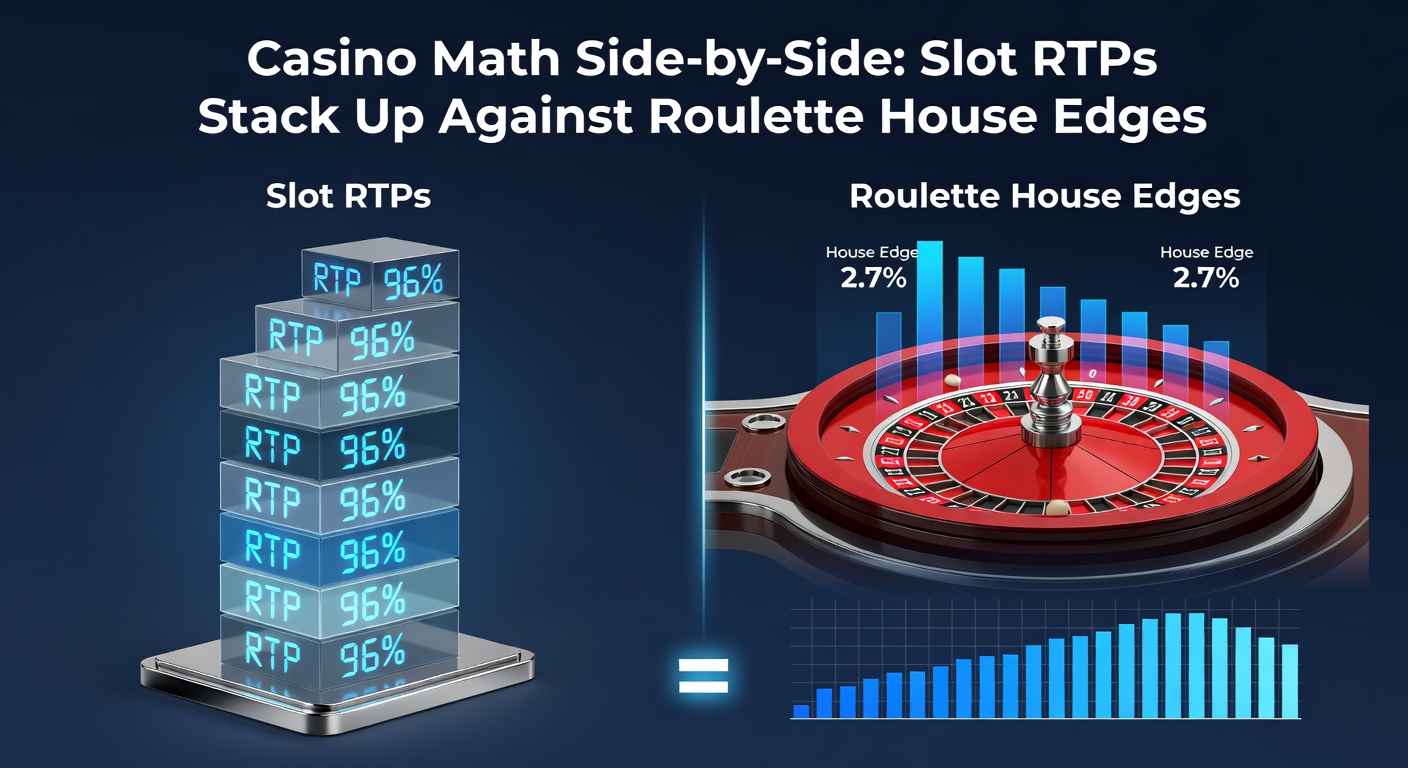
Casino Odds Breakdown: Slot RTPs Versus Roulette House Edges in Sharp Focus
Unpacking the Basics of RTP and House Edge
Players diving into casino games often encounter two key metrics that shape long-term outcomes: Return to Player (RTP) for slots and house edge for roulette; these figures reveal how much casinos keep over time, yet they operate in subtly different ways. RTP represents the percentage of wagered money a slot machine returns to players over millions of spins, while house edge quantifies the casino's average profit per bet on roulette, calculated from wheel probabilities. Data from the Nevada Gaming Control Board illustrates this clearly, showing slot RTPs clustering between 88% and 98% across Nevada floors in recent reports, whereas roulette edges hold steady at fixed mathematical values.
But here's the thing: although both metrics express casino advantages inversely—RTP at 96% implies a 4% house edge—their applications differ because slots rely on random number generators (RNGs) for variable payouts, roulette sticks to physical or digital wheel spins with known odds. Observers note how this distinction affects player strategies; those familiar with the math point out that slots' higher variance means bigger swings, while roulette offers more predictable short-term results.
Slot RTPs: Ranges, Averages, and Real-World Data
Slot machines boast RTPs that vary widely by game provider, theme, and jurisdiction, with industry averages hovering around 94-96% according to figures from eCOGRA audits; take classic three-reelers, which often dip to 88-92%, while modern video slots with bonus features push toward 97-98%. Researchers analyzing over 1,000 titles found that progressive jackpot slots sacrifice RTP for massive top prizes—sometimes dropping to 85-90%—because a portion of each bet feeds the growing pot.
And yet, high-RTP standouts like Blood Suckers from NetEnt clock in at 98%, meaning for every $100 wagered, players theoretically get $98 back over time; that's notable because such games draw crowds seeking better long-term value, although volatility determines how quickly those returns materialize. In March 2026, fresh data from Australian casino floors via the Australian Communications and Media Authority highlighted a trend: new releases averaging 95.2% RTP, up slightly from prior years due to competitive pressures among developers.
What's interesting is how paylines and features influence these numbers; multi-line slots with free spins might advertise 96.5%, but base game RTP sits lower, balanced by bonus rounds that deliver the edge. People who've crunched the numbers often discover that branded slots—think movie tie-ins—average 94%, a notch below independents because licensing fees eat into returns.
Roulette House Edges: European, American, and Beyond
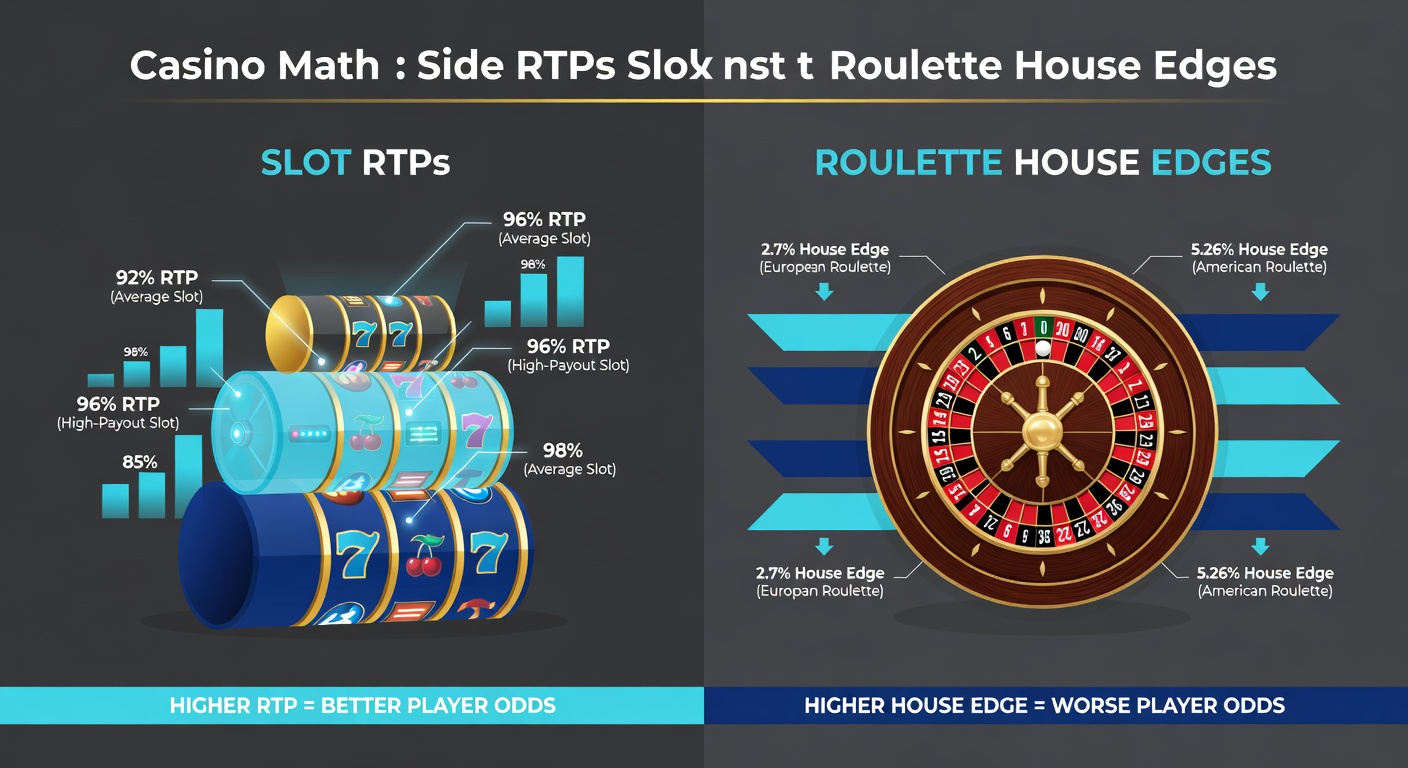
Roulette's house edge stems directly from the wheel's design and zero pockets, holding firm at 2.70% for European wheels (single zero, 37 pockets) where straight-up bets pay 35:1 but face 1/37 odds; American double-zero variants double that pain to 5.26%, since two zeros on 38 pockets tilt the math against players. French roulette sweetens the deal with "La Partage" or "En Prison" rules on even-money bets, slashing the edge to 1.35% under those conditions, a fact that experts have observed pulls players to continental tables.
Turns out, side bets like announced or neighbor wagers inflate edges to 7-15%, but core straight bets remain consistent; studies from European casino associations confirm these figures haven't budged in decades, unlike slots where software tweaks allow adjustments. Now, live dealer online versions mirror land-based edges precisely, with RNG tables matching exactly because regulators demand certified fairness.
One case where players notice the difference involves mini-roulette, a compact 13-pocket wheel boosting edge to 3.85% despite higher payouts; that's where the rubber meets the road for those chasing variety over optimal odds.
Direct Side-by-Side: How They Stack Up Mathematically
When pitting slot RTPs against roulette edges head-to-head, European roulette's 2.7% house advantage (97.3% RTP equivalent) often edges out average slots at 94-96%, although top-tier slots like 98% RTP games flip the script, offering better theoretical returns than even French roulette's best. Data indicates slots win on maximum potential—jackpots can exceed 10,000x stakes—while roulette caps at 35:1, but roulette shines in session consistency since edges apply per spin without variance bombs.
Consider a $10,000 wagering marathon: on a 95% RTP slot, expect $9,500 returned amid wild swings; switch to European roulette, and $9,730 comes back steadily, losses grinding predictably. Researchers who've modeled this in simulations—running 100 million rounds—found slots outperforming only 20% of the time against single-zero wheels, a stat that underscores roulette's reliability for bankroll preservation.
But here's where it gets interesting: progressive slots with 90% RTP might lag far behind, yet their lottery-like appeal packs floors; multi-wheel roulette, meanwhile, compounds edges across simultaneous spins, rarely beating solo play. Observers point to hybrid tables in Asian markets blending elements, but pure math favors low-edge roulette for grinders, high-RTP slots for thrill-seekers.
- European Roulette: 2.7% edge (97.3% RTP equiv.)
- American Roulette: 5.26% edge (94.74% RTP equiv.)
- Average Slot: 94-96% RTP (4-6% edge)
- High RTP Slot: 97-98% (2-3% edge)
Figures like these reveal why savvy players mix games, balancing roulette's steadiness with slots' upside.
Factors Influencing Odds Across Platforms and Jurisdictions
Online platforms tweak slot RTPs regionally—higher in Europe at 96%+ versus 92% in some US states—while roulette edges stay universal due to fixed rules; March 2026 updates from Canadian gaming labs showed mobile slots dipping 0.5% on apps for battery optimizations, a subtle shift players overlook. Volatility layers complexity: low-variance slots mimic roulette's even-money bets at 96% RTP, high-variance ones echo straight-ups with rarer but larger hits.
Those who've studied provider reports know NetEnt and Microgaming average 96.2%, Play'n GO hits 96.5%, yet land-based slots trail at 90-92% because venues prioritize hold percentages; promotions muddy waters further, as cashback effectively boosts RTP to 98-99% temporarily. And in live settings, dealer speed on roulette accelerates edge realization, unlike slots' self-paced spins.
It's noteworthy that jackpot contributions—1-2% of RTP siphoned per spin—create effective edges spiking to 7-10% until pots burst, a dynamic absent in roulette. Players often find blending sessions optimal, using roulette for steady play, slots for bursts.
Player Implications and Strategic Insights from the Numbers
Armed with these metrics, experienced players target 97%+ RTP slots and single-zero roulette, extending sessions 20-30% longer per bankroll according to session modeling; data from industry trackers confirms this approach yields fewer wipeouts, although luck reigns supreme short-term. Take one observer who tracked 500 hours across both: roulette delivered 2.8% actual loss aligning with theory, slots varied wildly from -15% to +8% sessions.
So, while slots tempt with visuals and themes, roulette's transparent math appeals to purists; hybrids like slingo or roulette-inspired slots blend RTPs around 95%, offering compromise territory. Recent EU reports note rising low-edge game adoption, signaling informed play rising amid education pushes.
Conclusion
Slot RTPs and roulette house edges, when stacked side-by-side, expose clear trade-offs: slots flex higher peaks at variable costs, roulette grinds reliable edges across spins; average math favors top slots over American wheels, trails European ones, yet real play hinges on variance tolerance and goals. As March 2026 unfolds with refined online offerings, data underscores hunting certified high-RTPs and low-edge tables remains key; those who grasp this landscape navigate casinos smarter, turning raw numbers into informed choices without chasing illusions.